Introduction
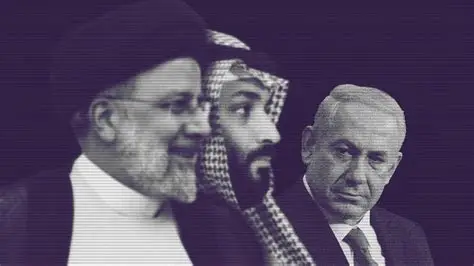
The contemporary Middle East is increasingly structured around a tri-polar balance of power composed of Saudi Arabia, Iran, and Israel (with the support of US operations). While other states retain influence, these three actors possess the combination of military capability, economic weight, diplomatic reach, and geostrategic positioning necessary to shape regional outcomes. The current confrontation between Iran and Israel must therefore be understood not as an isolated bilateral escalation, but as a structural stress test of a fragile regional equilibrium.
This paper advances three central arguments. First, Iraq and Syria, despite historical centrality, cannot presently operate as hegemonic powers due to internal fragmentation and structural weakness. Additionally, Emiratis and Qataris despite increasing influence on the regional stage, are caught between security dependence and niche diplomatic strategies. Second, Saudi Arabia has moved from aspirational regional leadership toward pragmatic acceptance of a managed multipolar order alongside Iran and Israel. Third, the Iran-Israel conflict generates acute strategic anxieties in Riyadh, particularly regarding maritime chokepoints, but mostly by shifting regional (re)alignments, the latter being facilitated by the potential consequences of regime change in Tehran.
I.a. Why Iraq and Syria Cannot Function as Regional Hegemons
Iraq: Sovereignty Constrained by Fragmentation and External Influence
Iraq’s current inability to act as a hegemonic power stems from structural political fragmentation and sustained Iranian influence over security institutions.
Since 2003, Iraq’s political order has been defined by sectarian power-sharing arrangements that institutionalized fragmentation rather than consolidated authority.¹ The presence of the Popular Mobilization Forces (PMF), some factions of which maintain operational alignment with Iran’s Islamic Revolutionary Guard Corps (IRGC), complicates the central government's monopoly over coercion.² While the Iraqi state formally integrates these forces, the reality is a hybrid sovereignty structure.
Furthermore, Iraqi parliamentary politics remain deeply divided between blocs aligned with Iran and those advocating stronger Arab or Western alignment.³ This persistent polarization undermines Iraq’s capacity to articulate and implement a coherent grand strategy independent of external patronage networks.
Counter-argument: One might argue that Iraq’s energy reserves and demographic weight provide the foundations for future leadership. While structurally possible, current governance instability, militia entrenchment, and external entanglements prevent Iraq from translating material capacity into hegemonic power.
Syria: Reconstruction Priority and Incomplete Political Integration
Syria’s present position is constrained by three structural impediments.
First, the country remains focused on post-conflict reconstruction after more than a decade of civil war.⁴ Economic devastation, infrastructure collapse, and sanctions divert state capacity toward survival rather than regional projection.
Second, political authority remains territorially fragmented. Despite regime consolidation in major urban centers, other actors such as the Syrian Democratic Forces (SDF) retain autonomous governance structures in the northeast.⁵ The incomplete incorporation of such entities into a unified national framework limits central authority.
Third, sectarian cleavages remain unresolved. The historical association of the Alawite minority with the Assad regime continues to shape political perceptions and social mistrust.⁶ Although outright secessionism is limited, sectarian fragility constrains the legitimacy required for hegemonic leadership.
Counter-argument: Some scholars note that Syrian alignment with Iran provides indirect leverage in regional politics.⁷ However, this leverage is derivative rather than autonomous; it reinforces Iran’s influence rather than Syria’s independent hegemonic status.
I.b. Qataris and Emiratis are rising but not yet shining
Although the United Arab Emirates and Qatar have expanded their regional influence over the past decade, the scholarly literature consistently characterizes both as small or medium-sized states that exercise influence through niche strategies rather than structural dominance.
Christopher Davidson emphasizes that the UAE’s political economy is sustained by a small citizen population and a large expatriate workforce, a configuration that shapes both state capacity and security dependence. Similarly, Mehran Kamrava defines Qatar as a “small state” that compensates for limited demographic and territorial depth through mediation diplomacy, media influence, and strategic alliances rather than military predominance.
Analyses of the UAE’s regional activism note its interventions in Yemen and Libya, but describe its approach as pragmatic, coalition-based, and calibrated rather than system-defining. Ulrichsen argues that the smaller Gulf monarchies project influence primarily through economic connectivity, financial statecraft, and hedging behaviour within existing regional power structures.
By contrast, scholarship on Iran highlights the institutionalization of proxy networks through the Islamic Revolutionary Guard Corps and the development of a long-term “forward defense” doctrine embedded within state strategy.
Studies of Israel’s security doctrine similarly underscore the centrality of qualitative military edge, pre-emption, and institutionalized deterrence as enduring pillars of national strategy.
Analyses of Saudi foreign policy, meanwhile, emphasize the Kingdom’s sustained effort to shape regional political order through energy policy coordination, financial statecraft and leadership within the Gulf Cooperation Council. Gause argues that Saudi Arabia has historically acted as a central pole in Gulf security politics, leveraging oil production capacity and diplomatic leadership to influence regional alignments. Young further demonstrates that Saudi economic statecraft under Vision 2030 has become integrated into broader foreign policy strategy, linking domestic transformation with regional stability objectives.
Taken together, this body of research describes the UAE and Qatar as influential and strategically agile actors, but situates their influence within existing regional structures rather than portraying them as foundational architects of the regional security order.
Read here:
Christopher Davidson, The United Arab Emirates: A Study in Survival (Lynne Rienner, 2005).
Mehran Kamrava, Qatar: Small State, Big Politics (Cornell University Press, 2013).
Kristian Coates Ulrichsen, “The UAE’s Expanding Regional Role,” Arab Gulf States Institute.
Kristian Coates Ulrichsen, The Gulf States in International Political Economy (Palgrave, 2016).
Afshon Ostovar, Vanguard of the Imam (Oxford University Press, 2016).
Efraim Inbar, “Israel’s National Security Doctrine,” Begin-Sadat Center.
U.S. Energy Information Administration, “World Oil Transit Chokepoints,” latest edition.
Afshon Ostovar, Vanguard of the Imam (Oxford University Press, 2016).
Efraim Inbar, “Israel’s National Security Doctrine,” Begin-Sadat Center.
Gregory Gause III, The International Relations of the Persian Gulf (Cambridge University Press, 2010).
Karen Young, The Economic Statecraft of the Gulf States (Brookings, 2022).
II. The Tri-Polar Structure: Iran, Israel, and Saudi Arabia
a) Iran: Strategic Depth and Chokepoint Leverage
Iran’s regional posture rests on a strategy designed to offset conventional military inferiority through asymmetric warfare and anti-access capabilities. Tehran relies on missiles, drones, cyber tools, and naval disruption tactics to raise the cost of direct confrontation. Its network of proxy forces across Lebanon, Iraq, Syria, and Yemen extends deterrence and influence without formal escalation. This layered structure allows Iran to shape regional conflicts while maintaining strategic depth beyond its borders. Crucially, its leverage over the Strait of Hormuz, a transit route for roughly one-fifth of global oil, links regional security to global energy stability.⁸ As such, Tehran’s forward defense strategy extends influence across Iraq, Syria, Lebanon, and Yemen.⁹
Iran’s rivalry with Israel is ideological and strategic. Since 1979, Iranian leadership has positioned opposition to Israel as a core pillar of its revolutionary identity.¹⁰ This antagonism has produced proxy confrontations under the umbrella of the so-called `Axis of Resistance` rather than sustained direct war.
b) Israel: Technological Superiority and Strategic Partnerships
Israel’s strength lies in technological military superiority, intelligence capacity, and strategic alignment with the United States.¹¹ The normalization agreements with the United Arab Emirates (and Bahrain) under the Abraham Accords marked the beginning of a structural transformation in Israel’s regional integration that has long conserved Israeli capacities below potential. This brought diplomatic and economic benefits without making any costly political concessions on big issues like the Palestinian issue that kept Saudi Arabia away from following in the Emiratis footsteps.¹²
Israel’s security doctrine emphasizes pre-emption, deterrence, and qualitative military edge. The current confrontation with Iran fits within this doctrinal framework.
c) Saudi Arabia: From Aspirational Hegemon to Manager of Balance
Historically, Saudi Arabia sought regional leadership rooted in religious legitimacy, energy dominance, and financial leverage.¹³ Having its regional leadership anchored in religious legitimacy as guardian of Islam’s holiest sites under the House of Saud, Riyadh is projecting influence across the Sunni world. Additionally, its dominance in global energy markets through Saudi Aramco and leadership within OPEC gave it decisive leverage over oil prices and geopolitical alignments, while its vast petrodollar wealth, deployed via aid and institutions like the Public Investment Fund, allowed Riyadh to shape alliances along the Middle East and counter rivals such as Iran.
However, prolonged confrontation with Iran, particularly in Yemen, exposed the costs of unilateral assertiveness.¹⁴ The 2023 Saudi-Iran rapprochement brokered by China signaled a strategic recalibration.¹⁵ Rather than pursuing zero-sum dominance in a Cold War-like confrontation with Iran, Riyadh has demonstrated willingness to coexist within a structured multipolar order. This shift does not imply trust toward Iran, but rather recognition of structural constraints and the economic imperatives of Vision 2030, Saudi Arabia’s long-term plan to reduce dependence on oil by diversifying the economy.¹⁶ The latter becomes unviable in a context of continuous risk-taking and instability given the regional rivalry.
III. Saudi Concerns Regarding the Iran-Israel Conflict
Saudi Arabia’s discomfort with Israeli-Iranian escalation stems from three interconnected risks:
The UAE’s deepening ties with Israel under the Abraham Accords introduced competitive dynamics within the Gulf Cooperation Council (GCC) since Saudi Arabia remains less adamant to follow suit anytime soon and more concerned regarding the Emirati-Israeli joint projection of power in the region.¹⁷ Emirati investments in ports along the Red Sea and Gulf of Aden enhance Abu Dhabi’s maritime leverage.¹⁸ Combined with Israeli outreach in the Horn of Africa (as of March 2026, Israel is the only UN member state that formally recognizes Somaliland as an independent state), this could alter control dynamics near Bab el-Mandeb at the expense of Saudi strategic interests.
For Riyadh, this sort of strategic competition with the UAE intersects with concerns over Iranian leverage at Hormuz. A destabilizing escalation between Iran and Israel threatens both chokepoints simultaneously, disrupting energy markets. Moreover, the perception of a mass-conflict in the region endangers foreign investment. This clashes with Saudi plans to attract global companies, capital, and expertise into its Saudi Vision 2030.
A frequently overlooked dimension is Saudi anxiety regarding potential regime change in Iran. While Riyadh opposes Tehran’s revolutionary posture, a pro-Western or Israel-tolerant Iranian government could also undermine Saudi strategic positioning, not only directly and in the short-run through energy disruptions, but indirectly and in the long-run by throwing Iran into continuous instability and internal power struggles and by decreasing the stance of Iran as an agitator against an emerging Israeli-Emirati power pole in the region at the expense of no particular positive changes for Saudi Arabia. If a successor regime owed its emergence to U.S.-Israeli intervention, alignment patterns in regional security architecture might shift dramatically, and the tri-polar status-quo with them.
Given Iran’s geographic control over Hormuz, even a friendlier regime would possess structural leverage over energy flows. Thus, Saudi Arabia prefers predictable rivalry to unpredictable transformation. Additionally, scholarly literature on regime change cautions against assuming post-intervention stability.¹⁹ Saudi policymakers are acutely aware of Iraq’s post-2003 instability as precedent.
Conclusion
The contemporary Middle East is best understood not as a space of disorder, but as a constrained tri-polar system structured around Saudi Arabia, Iran, and Israel. Iraq and Syria lack the internal cohesion to act as autonomous poles, while the UAE and Qatar, despite wealth and agility, do not possess the demographic or military depth required for hegemonic leadership. Each of the three principal actors embodies a distinct logic of power: Iran projects revolutionary influence through networks and proxies, Israel relies on technological-military superiority and deterrence, and Saudi Arabia anchors the system through financial weight and civilizational legitimacy. Stability, therefore, does not emerge from harmony but from calibrated rivalry. The current equilibrium is fragile yet functional, sustained by mutual constraints and implicit red lines. Escalation between Iran and Israel risks transforming structured competition into systemic rupture. For Riyadh in particular, a managed balance is preferable to either revolutionary upheaval or Israeli-Emirati unipolar consolidation. The region’s order thus depends less on reconciliation than on the preservation of tension within limits. If those limits collapse, the tri-polar structure may give way to destabilizing bipolar confrontation or fragmented multipolarity. In that sense, the Iran-Israel conflict is not peripheral but central to the future architecture of the Middle East.
Important Note for readers: For the purposes of this article, the term “Middle East” refers to the Arab states of Western Asia and Iran. Although Turkey is partially located in Western Asia and is sometimes included in broader definitions of the Middle East, it is excluded here due to its distinct geopolitical orientation, historical trajectory, and institutional alignment with European and transatlantic structures.
Bibliography:
1. Adeed Dawisha, Iraq: A Political History (Princeton: Princeton University Press, 2009).
2. Renad Mansour, “More Than Militias: Iraq’s Popular Mobilization Forces Are Here to Stay,” Chatham House, 2018.
3. Harith Hasan, “Iraq’s Political System after 2003,” Carnegie Middle East Center.
4. Raymond Hinnebusch, The Syrian Conflict (Routledge, 2019).
5. International Crisis Group, “Squaring the Circles in Syria’s North East,” 2019.
6. Fabrice Balanche, “Sectarianism in Syria,” Washington Institute for Near East Policy, 2018.
7. Phillip Smyth, “Iran’s Proxy Network in Syria,” Washington Institute, 2017.
8. U.S. Energy Information Administration, “World Oil Transit Chokepoints,” latest edition.
9. Afshon Ostovar, Vanguard of the Imam: Religion, Politics, and Iran’s Revolutionary Guards (Oxford University Press, 2016).
10. Ray Takeyh, Guardians of the Revolution (Oxford University Press, 2009).
11. Anthony Cordesman, Israel and the Gulf (CSIS, 2020).
12. U.S. Department of State, “The Abraham Accords,” 2020.
13. F. Gregory Gause III, The International Relations of the Persian Gulf (Cambridge University Press, 2010).
14. Thomas Juneau, “Saudi Arabia’s War in Yemen,” International Affairs 92, no. 3 (2016).
15. International Crisis Group, “The Saudi-Iranian Rapprochement,” 2023.
16. Karen Young, The Economic Statecraft of the Gulf States (Brookings, 2022).
17. Yoel Guzansky and Elham Fakhro, “The Abraham Accords: Regional Implications,” Institute for National Security Studies.
18. Jonathan Fulton, “The UAE’s Maritime Strategy in the Red Sea,” Atlantic Council.
19. Alexander Downes and Jonathan Monten, “Forced to Be Free? Why Foreign-Imposed Regime Change Rarely Leads to Democratization,” International Security 37, no. 4 (2013).
Further reference: Louise Fawcett, International Relations of the Middle East (Oxford University Press, latest edition).