Assessment of the Middle East conflict should shift rapidly from the underestimation of Iranian geostrategic leverage, and from earlier analytical misreadings of that leverage, toward the strategic infrastructure that gives it operational effect.
For decades, conflicts across the Middle East have pushed Western governments and companies to identify and exploit alternative routes around the region's main maritime gateways: the Strait of Hormuz along the Iranian and Omani coastlines; Bab-el-Mandeb on the western edge of the Arabian Peninsula, between Yemen, Djibouti and Eritrea; and the high-profile Suez Canal under Egyptian administration.
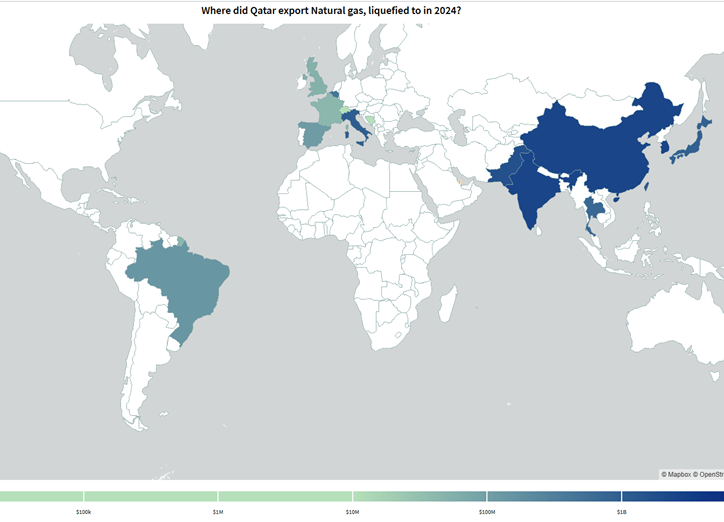
These established chokepoints enable the transit of regional hydrocarbons, including crude and refined oil, natural gas, liquefied natural gas (LNG) and petrochemicals.
While the Hormuz corridor provides access from Persian Gulf resource basins to Asian and European markets, Bab-el-Mandeb links the Red Sea to Asian routes, and the Suez Canal connects regional flows to European markets via the Mediterranean.
These narrow maritime passages have long been recognized as geopolitical flashpoints in periods of crisis and as instruments of strategic leverage in negotiations; Iran's use of the Hormuz card follows the same logic.
In the 1950s and 1960s, transit through the Suez Canal was effectively challenged by the nationalist orientation associated with Gamal Abdel Nasser.
At that time, Western responses to the canal blockade included drawing on oil surpluses from producers outside the Middle East, particularly the United States and Venezuela, which helped keep European energy prices relatively stable.
Regional oil companies also deployed larger tankers capable of carrying very high volumes of oil, reaching capacities of up to 2 million barrels.
Over time, the West moved toward designing new infrastructure projects intended not only to bypass traditional chokepoints, but also to create alternatives that might be less vulnerable to nationalism, Islamism or anti-Western political realignment.
These initiatives included the Metline scheme, designed to carry oil from the Persian Gulf to the Mediterranean through Iraq (and potentially Syria) and Turkey, as well as an Israeli pipeline concept linking the Red Sea port of Eilat to Haifa.
Additional proposals included Bechtel 1 and Onassis, two pipelines intended to run parallel to the Suez Canal, and Bechtel 2, which would cross Egypt toward Alexandria.
However, these projects cannot be treated as genuine crisis-time alternatives to the Suez Canal, or as safeguards against ideological realignment, because both would depend on Egypt, the same state that blocked Suez.
The more serious proposals that emerged from this broader pipeline thinking and were ultimately implemented included the Kirkuk-Ceyhan Oil Pipeline, commissioned in 1970 to transport Iraqi oil from Iraqi Kurdistan in the north-east to the Turkish Mediterranean terminal of Ceyhan, while bypassing Syria after its sabotage of the Iraq Petroleum Company a few years earlier.
Another major development was Israel's completion in 1969 of the Eilat-Ashkelon Pipeline (EAP), also known as the Trans-Israel Pipeline, a maximum-capacity oil line of approximately half a million barrels per day that evolved from the earlier Eilat-Haifa prototype and carried oil from the Gulf of Aqaba to the Mediterranean.
A further case was the Trans-Arabian Pipeline, or TAPLINE, active from the 1950s to the 1970s and designed to carry oil from the Persian Gulf to Mediterranean terminals in Lebanon via Jordan. The pipeline ceased to function in 1983 and fully stopped operating in 1990.
Saudi Arabia subsequently commissioned the East-West Crude Oil Pipeline, known as PETROLINE, in 1982, establishing a 1,201 km line across the Saudi Arabian Peninsula to transfer crude from the Persian Gulf to the Red Sea port of Yanbu, thereby bypassing Hormuz.
More recently, in 2012, the United Arab Emirates commissioned the Habshan-Fujairah oil pipeline, running from the Habshan onshore field in Abu Dhabi to Fujairah on the Gulf of Oman, again creating a route that bypasses Hormuz.
The latest Middle East conflict has therefore revived the strategic debate over infrastructure alternatives to the Strait of Hormuz, and even to Bab-el-Mandeb, which can be disrupted by Iran-aligned Houthi actors in Yemen.
As the Strait has been put under pressure and leveraged by Iran, it has functioned as a bargaining chip in negotiations with the United States and Israel and has triggered severe stress across energy markets, particularly in Asia.
At present, the Saudi PETROLINE and the Emirati Habshan-Fujairah pipeline together provide a maximum combined capacity of roughly 8 million barrels per day - 5 to 7 million for PETROLINE and 1.5 to 2 million for Habshan-Fujairah - which remains insufficient to replace the nearly 20 million barrels per day currently passing through Hormuz.
The completion of the Kirkuk-Ceyhan Oil Pipeline in 1976 by the Turkish and Iraqi sides added a further capacity of approximately 1.6 to 1.8 million barrels per day, but this remains insufficient to compensate for a simultaneous full closure of Hormuz, particularly in an environment where the United States, Venezuela and other smaller producers lack the surplus capacity required to cover the gap.
Given the growing difficulty of replacing the nearly 20 million barrels per day that move through Hormuz, the short- and long-term objective should be less about relying on a limited number of existing pipelines and more about expanding those assets while adding new infrastructure.
Under such a strategy, the energy-security buffer available in the event of a Hormuz closure would increase enough to provide greater resilience across energy markets, even if the shock from a Hormuz shutdown continued to persist at a lower level. In this scenario, the shock would remain, but it would become smaller and more manageable, allowing economic activity to withstand a longer disruption while negotiations extend over a prolonged period.
As an initial measure, the Kirkuk-Ceyhan pipeline should be restored to full operational status after the technical and legal disputes between the Iraqi federal government in Baghdad and the Kurdistan Regional Government. The pipeline should also be expanded to incorporate the major oil fields of southern Iraq, adding supplementary capacity that could exceed 3 million barrels per day. The Iraqi government has already taken steps in this regard by moving forward with a targeted bidding process for the multibillion-dollar project Basra-Haditha oil pipeline aimed to bring oil (around 2 million barrels per day) from Iraqi southern oil fields to the north. The Ministry of Oil invited companies to submit proposals for the pipeline in the Iraqi attempt to escape the Hormuz trap.
The larger strategic project would be to relaunch the Trans-Arabian Pipeline in order to move oil from the Gulf to the Mediterranean Sea, either toward terminals in Israel or Lebanon. The most effective solution would be a bifurcated route between Israel and Lebanon once the pipeline enters the Levant, reducing the risk that potential geopolitical conflict between Israel and Hezbollah would render the system ineffective. Under that configuration, neither Israel nor Hezbollah would be able to threaten the complete closure of the pipeline.
At the same time, Gulf states should continue investing in the expansion of both the Saudi PETROLINE and the Emirati Habshan-Fujairah oil pipeline.
Before the war with Iran, this proposal would have appeared comparatively straightforward given the significant financial strength and capital depth of the Gulf emirates.
For years, Gulf sovereign wealth funds, especially the Abu Dhabi Investment Authority and the Saudi Public Investment Fund, have dominated global investment activity, overseeing assets that today exceed 5 trillion dollars.
The war, however, has changed both the direction and the nature of investment in the Gulf. Since the start of the war, Gulf monarchies have been among Iran's principal targets. They have sustained damage to public and energy infrastructure, particularly in Qatar and the United Arab Emirates.
Sovereign wealth funds will almost certainly become key stakeholders in government plans to repair damage to energy infrastructure and will likely be expected to finance potential alternative oil routes or the expansion of existing routes designed to bypass Hormuz.
However, in recent years, Gulf sovereign funds have allocated substantial capital to the acquisition of artificial intelligence unicorns and Premier League football clubs. These holdings are less liquid than bonds and equities. At a moment when short-term requirements include repairing energy infrastructure and expanding capacity, these funds may, for the first time, lack sufficient liquid capital to redirect investment at scale into infrastructure as part of a strategic deterrence-oriented national strategy.
This constraint is further intensified by an economic slowdown, as the conflict has blocked Gulf hydrocarbon exports while instability has pushed tourism and business activity to record lows.
Bibliography:
How the West Can Escape Iran's Hormuz Trap
War will drain the Gulf’s $6trn treasure chest
Iraq Advances $4.6 Billion Basra–Haditha Oil Pipeline to Bidding Stage