The current Middle Eastern crisis involving Iran, the United States and Israel creates multiple possible end-state scenarios. However, the post-crisis security debate now taking shape across the Gulf appears more narrowly structured. The assessment is that Gulf states (consisting of Saudi Arabia, the United Arab Emirates, Qatar, Bahrain, Kuwait and Oman) are likely to evaluate two principal strategic directions: first, maintaining the United States as the main security partner, but under a fundamentally redesigned security partnership; second, looking inward to build greater regional security sovereignty through the Gulf Cooperation Council (GCC) and more autonomous (from the US or other external players) defense coordination.
The debate is driven by a deep sense of Gulf frustration with the way the crisis unfolded. From the Gulf perspective, the United States and Israel did not adequately integrate the security concerns of Gulf states into their strategic calculations. For a prolonged period, Gulf governments sought to encourage Washington to give diplomacy a real chance in the confrontation with Iran, especially in relation to renegotiations around the Iranian nuclear program. Instead, President Donald Trump accepted the Israeli argument advanced by Prime Minister Benjamin Netanyahu that direct conflict represented the only viable route to prevent Iran from acquiring a nuclear weapon, and that a rapid decapitation of the leadership in Tehran would break the regime.
The underlying assumption behind the US-Israeli strikes on Iran at the end of February was that removing the top leadership would trigger the collapse of the broader regime structure. That assumption may have worked in previous cases involving terrorist organizations, but it underestimated the nature of the Iranian state. Iran is not held together by one individual. Its institutional architecture is highly stratified, and therefore capable of absorbing a major shock. Iran suffered losses, and the Gulf absorbed significant economic and infrastructure costs, but the Iranian regime did not collapse.
The central dilemma for the Gulf is that the presence of American bases was intended to deter further aggression, particularly from Iran. The unofficial US defense umbrella enabled Gulf states to focus on domestic economic transformation, including the attraction of foreign direct investment into non-fossil-fuel industries across the Arabian Peninsula. Yet the crisis demonstrated that deterrence did not fully produce the expected outcome. On the contrary, the presence of American bases effectively invited Iranian strikes against Gulf territory.
From Tehran's perspective, it was not decisive that Gulf states had not directly supported the US and Israeli attack on Iran. What mattered was that the Gulf was indirectly embedded in an American-Israeli security system oriented against Iran. As missiles damaged energy and civilian infrastructure in major Gulf cities, the operating assumption in the region became that the United States had not adequately protected the Gulf from a conflict that Washington had initiated without Gulf consent.
This could logically lead to the conclusion that the Gulf should abandon the US security partnership, on the grounds that it created more vulnerability than security. However, the assessment is more complex.
Iranian missiles and drones did strike Gulf territory, particularly the United Arab Emirates. At the same time, the impact could have been significantly more severe without the American military presence in the region. As several Gulf voices have argued, the crisis ultimately became a confrontation between Iranian missiles and American defense systems. The Gulf therefore recognizes two opposing realities at once: the US presence helped trigger Iranian retaliation, but it also reduced the scale of damage that retaliation could have caused.
The Gulf's core security concern is that the conflict may end with Iran weakened but vengeful, while the Strait of Hormuz remains vulnerable to closure, disruption or political regulation through balance-of-power dynamics. These concerns predate the present crisis. Iran has pursued a revolutionary regional posture for decades through its nuclear program and its support for the Axis of Resistance, a proxy network across the Middle East. However, the current situation adds a different layer of risk. A revolutionary Iran was one thing; a regime pushed toward survival mode and revenge is another. This is the security problem the Gulf must address in the medium term, now more than before the Iranian regime was hit.
The Gulf cannot easily resolve this challenge internally through the institutional umbrella of the Gulf Cooperation Council because intra-Gulf divisions remain material. Gulf states have shown unity when risk is imminent, as they did immediately after Iranian strikes hit the region. However, divisions re-emerge when the debate turns to the longer-term strategic response. The main sources of divergence are the uneven distribution of casualties, different levels of risk tolerance, different threat perceptions and different degrees of dependence on the rapid reopening of Hormuz and the return of normal business conditions.
Oman illustrates the lower-risk end of the Gulf spectrum. It suffered the fewest casualties from Iranian strikes and has direct access to the Indian Ocean via the Gulf of Oman. It also benefited economically from the closure of the Strait of Hormuz. As a result, Muscat has adopted a conciliatory diplomatic posture focused on restraint rather than confrontation with Iran. This is reinforced by Oman's long-standing role as a mediator between Washington and Tehran.
The United Arab Emirates sits at the opposite end of the spectrum. The UAE absorbed the greatest damage from Iranian missile and drone attacks, and its economy is far more dependent on free passage through Hormuz, as well as on political and security stability. Although Abu Dhabi previously attempted to reconcile with Tehran through diplomatic channels, the scale of the strikes has reduced its confidence in diplomacy. The UAE is therefore considering military contributions to the US-Israeli coalition. The rest of the GCC sits between these two poles, with Bahrain closer to the Emirati position and Qatar closer to the Omani position.
This divergence means that some Gulf states may be willing to deploy military capabilities on the US and Israeli side, while others may view direct involvement as an invitation to further Iranian retaliation. In addition, with the possible exception of the UAE and potentially Bahrain, distrust of Israel as a security partner remains deep. That distrust has been reinforced by the perception that Israel pushed President Trump into a conflict that Gulf states would have preferred to resolve through diplomacy rather than military escalation.
Because internal cohesion is under strain, at least in the near to medium term, Gulf states are likely to explore external alternatives. These alternatives are unlikely to replace the US role in the region, but they may be considered as complementary security layers.
Russia and China remain important partners with which GCC states maintain close relations. However, the probability that Moscow or Beijing could become active pillars of a new Gulf security paradigm in which the United States plays only a secondary role is low. Russia remains heavily constrained by the war in Ukraine, which has weakened the Russian economy and slowed its progress in the competition with the United States and China over advanced technology and artificial intelligence. Moscow also maintains at least cordial relations with Tehran, including through the Comprehensive Strategic Partnership signed in 2025. Moreover, its regional position has weakened since the departure of Assad from Syria.
China has major economic and trade interests in the Gulf, while remaining Iran's main economic partner and oil purchaser. However, Beijing has shown limited appetite for using its influence decisively in the region. China is more likely to adopt a wait-and-see posture than to position itself as a security alternative or major strategic stakeholder. Both China and Russia are therefore perceived regionally less as substitutes for the US presence and more as political enablers of the Iranian regime.
Pakistan is a more specific case. Saudi Arabia signed a mutual defense agreement with Islamabad in 2025, and Pakistan's nuclear status could theoretically provide a deterrent layer. Yet Pakistan did little after the Kingdom was hit, apart from mediating between the United States and Iran once a ceasefire was agreed. Islamabad's mediation role may have been driven less by its partnership with Saudi Arabia and more by the impact of the Hormuz-related energy crisis on Pakistan's own economy.
Egypt and Turkey remain minor stakeholders for now. Turkey's position is more complex. Ankara has a balanced but complicated relationship with Tehran, often described as a modus vivendi shaped by the Ottoman-Safavid rivalry from the seventeenth century, when the confrontation was perceived as one between Sunni imperialism and Shiite opposition. That historical settlement established a pattern in which neither side would directly wage conflict against the other or interfere in the other's domestic affairs.
This does not prevent Turkey from complementing the United States as a strategic partner for Gulf security, especially because both Washington and Ankara are NATO members. However, in the current conflict, Ankara is more interested in seeing the Iranian regime survive than collapse. A regime collapse in Iran could trigger unrest that might derail the current Ankara-PKK peace talks. If the conflict were to include the ethnic militarism envisioned by the Trump administration at the beginning of the conflict, arming the Kurds in Iran would reduce the incentive of those associated with PKK to lay down arms under the PKK-Turkey framework. Such arming would also take place against the backdrop of an Iranian power vacuum.
For Turkey, the most significant near-term threat is not the Islamic Republic in Tehran but the possible resurgence of open conflict with the PKK, especially on Turkish soil. Since the Turkish economy is not as dependent on Hormuz as the Gulf economies are, Ankara has different priorities. By contrast, a weak but stable Iranian regime may not satisfy many Gulf states, which may see such a regime as a vengeful actor capable of closing Hormuz. Iran would not require major resources to disrupt the Strait; a limited mix of drones, mines and rapid intervention boats could be sufficient. Some Gulf states may therefore want to see the conflict fully completed and Iran defeated entirely, while others understand the limits of that objective and are also wary of a region dominated militarily by Israel. No Gulf state, not even the UAE or Bahrain, wants regional security to be subordinated to Israeli military dominance.
The Gulf cannot easily replace US security guarantees with external alternatives. The most realistic option would be a broader security consortium including Egypt, Pakistan and Turkey, but with the United States remaining the central actor. US-Gulf relations date back decades (especially those with the Saudis). Officials are familiar with each other at the highest levels, defense logistics have been built around American bases, and security ties are deeply institutionalized. Internal divisions notwithstanding, Gulf states are unlikely to yield to Iranian pressure to close American bases or abandon the defense partnership with Washington. Iranian attacks have reinforced the argument that the Gulf needs US protection more than ever. This remains true despite Gulf efforts to preserve neutrality during the conflict, maintain communication channels with Tehran, normalize relations and avoid escalation. The Saudi-Iranian detente of 2023 remains the strongest example of that approach. Yet the Gulf was still attacked by an Iran that has proven highly unpredictable.
Continuing to rely on the traditional security guarantor does not mean a return to business as usual. The crisis has shown more clearly than before that the current US-Gulf security relationship resembles a seller-buyer model. The United States has long acted as an arms producer and guarantor of security by selling advanced military technology and weapons to Gulf clients, while avoiding a broader institutionalized guarantee that the Gulf would not suffer damage beyond what US-provided anti-missile systems could intercept.
After the conflict ends, regardless of the outcome, Gulf leaders are likely to push Washington toward a more collaborative partnership in which the Gulf and the United States become co-producers, co-developers and co-financiers of defense industries, particularly defense systems. More joint ventures between US defense companies and Gulf state-owned companies would likely form part of this model.
This would move the relationship beyond the traditional security-for-oil-and-capital formula and toward a more comprehensive structure comparable to elements of the European Union's Permanent Structured Cooperation (or PESCO). Such a model could include a Coordinated Annual Review on Defense, understood as a process for monitoring the defense plans of all stakeholders, coordinating spending and identifying potential collaborative projects; a Shared Defense Fund; and a Military Planning and Conduct Capability, understood as a permanent operational headquarters at the military-strategic level for operations deployed under a common US-Gulf security and defense policy as backed by a shared political commitment towards defense and security in the region.
The Gulf has pursued a NATO-like mutual defense agreement for years, without success. Even countries that normalized relations with Israel, such as the UAE and Bahrain, have not obtained full legal defense protection. This is important because normalization with Israel was understood as a likely precondition Washington would have placed on Saudi Arabia in exchange for a mutual defense agreement. Ironically, the UAE, one of the countries most closely associated with normalization with Israel and deeper US-backed security integration (along with Israel), suffered the heaviest Iranian missile damage among Gulf states.
A second major dimension of any new US-Gulf security arrangement should be Washington's support for what can be described as a regional revolution in energy infrastructure. A previous Asian Atlas regional report published at the beginning of May argued that the Gulf needs a new configuration of alternative pipelines and expanded capacity in existing ones in order to escape the Hormuz trap.
This will be expensive. Despite appearances, Gulf states may not have sufficient short-term liquidity to finance such projects easily. Regional petrodollars have increasingly been directed into less liquid assets rather than bonds and equities, including acquisitions of artificial intelligence unicorns and Premier League football clubs. Regional rivalries, especially the Saudi-Emirati rivalry, and divergent levels of dependence on Hormuz, especially between the UAE and Oman, could make energy infrastructure coordination difficult.
Oman would be less inclined to help finance a pipeline bypassing Hormuz through its territory toward the Indian Ocean or the Gulf of Oman. This reluctance would reflect both the limited economic impact of Hormuz closure on Oman and Muscat's more cordial relations with Iran compared with the UAE and Qatar. Saudi Arabia, which already has the East-West PetroLine on its territory, could expect the Persian Gulf emirates - the UAE, Qatar, Kuwait and Bahrain - to contribute more financially to pipeline expansion than Riyadh, since Saudi Arabia already has a route to move oil from the Persian Gulf to the Red Sea. The Houthi-imposed constraint on the Bab-el-Mandeb Strait could, however, change this perception of Riyadh.
Saudi-Emirati tensions over Yemen and the recent UAE withdrawal from OPEC, which is widely viewed as a de facto cartel led by Saudi Arabia, further complicate coordination. This is where the United States could intervene through its extensive regional diplomacy and its relationships with all Gulf states. Washington could help remedy, coordinate and even financially support (through private investment coordination, joint ventures or mergers and acquisitions) major energy infrastructure projects across the Arabian Peninsula. Such involvement would also be in the US interest. Free flows of energy, chemicals and shipping are critical to both the United States and the wider global economy. Disruption in Hormuz affects the US economy as well as the global economy. A coordinated US-Gulf energy infrastructure agenda would therefore serve both sides, particularly because Tehran has demonstrated that it can disrupt trade flows through Hormuz with limited additional resources, including drones and military speedboats. Hormuz may never again be considered fully safe from political constraints.
The alternative scenario is that the Gulf reduces its reliance on the United States as the main security partner and regional guarantor and focuses instead on internal regional capacity. Under this scenario, reliance on external partners - whether the United States, Pakistan, Turkey or Egypt - does not provide genuine sovereignty over regional security. If the region is moving into disorder, then the region itself must clear the path toward stability and calm rather than depending on external powers to end the disorder. Outside powers may not view the Gulf with the same urgency or threat perception as the states facing the risks every day.
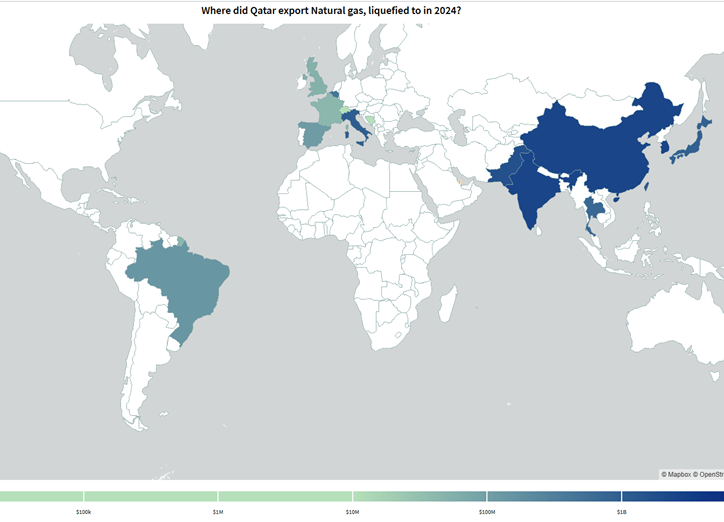
Pakistan may be primarily interested in reopening Hormuz because of the impact that strait closure and energy-flow disruption have on the Pakistani economy, a point also linked to the analysis in Asian Atlas on “The New Energy Fault Line: LNG, Iran, Hormuz, and the Fragmentation of Global Markets” across moderate and severe scenarios. Turkey, for its part, may prefer to keep Iran intact rather than absorb the consequences of a chaotic Iran. This does not fully address Gulf security concerns, particularly if an intact Iranian regime also means a weaker and more vindictive one.
The United States has also shown inconsistency in sending a categorical message of conditional support for Gulf security. In February, Israeli interests and the construction of a new regional security architecture rooted in Israeli military dominance and Iranian weakness, including the weakening of the Axis of Resistance, appear to have mattered more to the Trump administration. Bahrain and the UAE had perceived normalization with Israel under the Abraham Accords as a step toward deeper integration into a US-backed security order and easier access to American and Israeli military technology. The Iranian missile and drone attacks demonstrated that neither Israel nor the United States had fully taken Emirati or Bahraini security concerns into account before launching Operation Epic Fury against Iran in early spring.
Gulf concerns about US commitment are not new. Since the pivot to Asia announced by the Obama administration in 2011, and later reinforced by the Trump administration as a pivot overwhelmingly focused on China, Gulf states have worried about whether Washington would sustain its regional interest. The US withdrawal from Afghanistan in 2021 under the Biden administration, despite the known risk that the country would fall to the Taliban, was interpreted in the Gulf as the abandonment of an ally, President Ashraf Ghani. Gulf states fear that, if not for the importance of continuous energy flows to the United States, Washington might have treated regional security as expendable. They also fear that Washington could seek an easy exit from a costly Iranian conflict and declare domestic victory simply by emphasizing that Iran had become militarily weaker as a result of US operations. This might happen regardless of leaving the Gulf in a dangerous regional status-quo.
At the regional level, the Gulf Cooperation Council can serve as the institutional pivot. The GCC is a regional, intergovernmental (politically-oriented), and qvasi economic union comprising Bahrain, Kuwait, Oman, Qatar, Saudi Arabia and the United Arab Emirates. As a political forum, it could use diplomatic and political persuasion to alleviate existing intergovernmental tensions, particularly the Riyadh-Abu Dhabi rivalry.
This would not guarantee success. The GCC cannot fully resolve issues of risk management or divergent threat perception toward Iran. However, an intergovernmental forum where differences can be presented and negotiated is a necessary first step. The GCC has repeatedly demonstrated an ability to reduce intra-Gulf tensions even when political gaps were deep. Relevant precedents include the 2014 diplomatic rift with Qatar, when Saudi Arabia, the UAE and Bahrain withdrew their ambassadors before relations were restored through a GCC-backed understanding; the 2017-2021 Qatar blockade, when the Al-Ula Declaration offered a formal path to reconciliation after one of the most serious crises in the Council's history; the 2011 unrest in Bahrain, when divergent regional perceptions during the Arab Spring were channelled into a collective security response; and the more complex case of the GCC monetary union, where disagreement did not prevent a smaller group of members from continuing cooperation. These episodes show that the GCC does not always eliminate strategic differences, but it can function as a pragmatic platform for de-escalation, dialogue and renewed coordination among members.
The GCC also has a military dimension that is less often emphasized. It has a common military command, but internal divisions over how to respond to Iranian aggression and long-standing intra-Gulf rivalries, especially the recent Saudi-Emirati rivalry, have made real defense integration a distant objective. As outlined earlier, GCC unity tends to be strongest when risk is imminent, as occurred when Iranian strikes hit all Gulf states, albeit disproportionately. Unity weakens or disappears when urgency fades and strategic thinking about the post-crisis environment takes over.
The experience of imminent risk should reinforce the idea that defense cooperation is indispensable. Such cooperation should be treated as a permanent alignment among participating stakeholders rather than as an automatic verbal reaction that disappears once the dust settles in the Middle East. The Iran crisis contains all the structural features - economic instability, political insecurity and civic fear - that could generate stronger urgency around defense cooperation. A common declaration condemning Iran for destabilizing behavior would not be sufficient.
The process could begin with practical and incremental steps. These include common intelligence sharing, shared early-warning radar data and the creation of a command responsible for coordinating air defenses among Gulf states. The GCC could replicate at the regional level some of the features discussed earlier under the proposed US-Gulf new security paradigm. This could take the form of a Gulf Defense Club, including a process for monitoring the defense plans of all stakeholders, coordinating spending and identifying collaborative projects, as well as a permanent operational headquarters at the military-strategic level for operations deployed under a common Gulf security and defense policy agreed and established politically within the GCC.
Spending coordination, and especially the creation of a common Defense Fund, would be more difficult to achieve quickly. Such a fund would be needed to finance the pooling of stockpiles of common anti-drone technology and to support defense industries focused on air defense. However, differences in threat perception and urgency among GCC states would likely produce disproportionate financing contributions.
Oman, and possibly Qatar, may not view the Iranian threat in the same way as other GCC members. Oman's access to the Indian Ocean means that Iran's recurring threat to close Hormuz would genuinely test Muscat's solidarity with Gulf neighbors trapped in the Persian Gulf. Oman and Qatar may therefore be less willing to commit substantial resources to a common defense fund than other GCC states.
The sovereign wealth funds likely to finance enhanced defense-industrial cooperation are also unequal in financial strength and liquidity. Some funds, including the Saudi Public Investment Fund, the Abu Dhabi Investment Authority and the Kuwait Investment Authority, have financial strength above USD 1 trillion. Bahrain, Qatar and Oman have more limited funds, with the Oman Investment Authority, at around USD 53 billion, being the smallest in the region. However, total investment value is not the same as short-term liquidity. Different funds may face different constraints when required to mobilize resources quickly for defense needs. Saudi and Emirati funds are large, but in recent years they have invested heavily in more illiquid private assets, including artificial intelligence unicorns and sports clubs, and less in more liquid instruments such as bonds and equities. When urgency increases, it may take time to liquidate such investments and redirect resources toward new priorities. In addition, Emirati and Saudi funds are involved in government-linked investments in mines and farms in Africa and the Asia-Pacific, supporting national strategies for food security and critical minerals. These arrangements are difficult to unwind or disrupt.
Funding constraints should not be interpreted as absolute limits on defense cooperation. Europe shows that integration can advance across multiple dimensions, with some member states moving deeper into intergovernmental or supranational alignment while others remain behind for the time being. PESCO is a clear example of differentiated integration within the EU defense architecture. It provides a structured framework for deeper defense cooperation, but participation is limited to willing and able member states, and even within PESCO, countries participate selectively in projects based on their strategic priorities, military capabilities and political preferences. The European Monetary Union (or eurozone), is an even better-known example.
The Gulf already has its own precedent. Disagreements over the EU-modeled GCC monetary union did not prevent a smaller group of members from continuing cooperation. Oman and the UAE withdrew, but the GCC absorbed the withdrawals institutionally. Rather than abandoning the entire process, Bahrain, Saudi Arabia, Qatar and Kuwait signed the Monetary Union Agreement and created the Gulf Monetary Council, keeping the path toward a full monetary union alive.
The same rationale could apply to a common Defense Fund. Some countries may remain less committed, such as Qatar, or not committed at all, such as Oman. That would not prevent others, especially the UAE and Saudi Arabia, from committing more deeply to a common defense architecture. Saudi Arabia has been Iran's principal regional rival for decades, while the UAE has been the Gulf state most heavily targeted by Iranian strikes. Oman and Qatar could remain behind initially and be persuaded toward deeper integration later. Iranian behavior will ultimately influence their decisions, just as Sweden and Finland significantly shifted their defense policies and joined NATO amid rising European security concerns linked to Russian aggression.
Differentiated integration in regional defense is preferable to no integration at all. The crisis has exposed the vulnerability created by individualistic Gulf approaches to defense and security. At the same time, it has tested the credibility and limits of the US security commitment toward the region.
The most likely outcome is not a full Gulf rupture with Washington, but neither is it a return to the pre-crisis security model. The Gulf will probably seek a dual adjustment: retaining the United States as the main security guarantor while demanding a more collaborative, institutionalized and industrially integrated partnership; and, in parallel, strengthening regional defense coordination through the GCC, even if integration advances unevenly among member states.
For Gulf decision-makers, the central policy challenge is therefore not whether to choose Washington or regional autonomy. The real question is how to combine external security guarantees with greater regional ownership of defense, infrastructure resilience and crisis management. For external stakeholders, the key implication is that future engagement with the Gulf will need to move beyond arms sales and declaratory support. It will need to address co-production, air and missile defense, anti-drone capabilities, energy infrastructure resilience, Hormuz bypass capacity and the political management of intra-Gulf divergences.
Bibliography:
The End of the Axis of Abraham | Foreign Affairs
America and the Gulf Still Need Each Other | Foreign Affairs