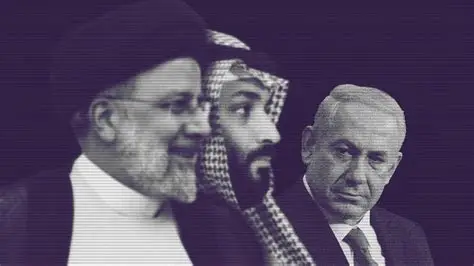
The negotiations currently unfolding in Islamabad, Pakistan, between the United States and Iran, set against the backdrop of a two-week ceasefire that has temporarily halted a six-week conflict involving Iran and the U.S.-Israel coalition, are poised to test, perhaps more than any prior episode, the Islamic Republic’s commitment to the so-called Axis of Resistance, particularly to one of its most consequential proxy actors Hezbollah, a central pillar of Iran’s regional network of influence.
Recently, Iranian hardliners have increasingly criticized the strategic posture of the late Supreme Leader, Ayatollah Ali Khamenei, viewing his approach as excessively cautious in the management of Iranian operations against the United States and Israel. This restraint was designed both to avoid provoking deeper U.S.-Israeli coordination against Iran and to prevent the extension of direct military confrontation to the borders of the Islamic Republic. At the same time, the Axis of Resistance has long been conceptualized as a strategic military buffer, with its proxy network effectively absorbing and deflecting Israeli military pressure away from Iranian territory. Nevertheless, Khamenei pursued a strategy aimed at advancing the Axis of Resistance against Israel without engaging in overt operational coordination between Iran and its proxies. In practice, this translated into a model whereby Tehran allowed its allied groups to confront Israel largely independently, even as Israel systematically targeted and eliminated these actors, thereby incrementally shifting pressure toward Iran itself. This strategic calculus may now be undergoing revision.
The current leadership, widely perceived as more hardline, or at least less risk-averse than predecessors who were killed in Israeli strikes and subsequently replaced, appears to have adopted a more assertive posture. This shift is evidenced by Iran’s recent willingness to target Gulf states, including those traditionally viewed as relatively close to Tehran, such as Qatar and Oman. Iranian actions have included strikes on U.S. bases in the Gulf, as well as on radar systems and interception infrastructure, with the apparent objective of degrading the military advantages held by the United States and Israel. Most notably, Iran closed the Strait of Hormuz without hesitation. Concurrently, Hezbollah launched attacks against Israeli targets from Lebanese territory.
It remains uncertain, however, whether these developments constitute a fundamental departure from Iran’s longstanding reliance on proxy-based military responses alone, or merely reflect a reactive escalation following direct attacks on Iranian soil. What is clear is that the depth of Tehran’s commitment to Hezbollah (and the Axis of Resistance as a whole) will be rigorously tested in the diplomatic arena in Islamabad.
The issues on the table
The negotiations between Iranian and American representatives in Islamabad to end the conflict in the Middle East that endangered the regional security architecture and raised energy prices globally, are unlikely to be straightforward. They will begin from positions marked by significant divergence. Iran is acutely aware that the Donald Trump administration is motivated to secure a rapid resolution to the conflict and restore stability to global energy markets. The reopening of the Strait of Hormuz was, from the outset, the cornerstone of the ceasefire agreement. However, the question of who will control maritime transit through the strait remains deeply contentious.
Both Iran and the United States agree in principle on reopening the Strait of Hormuz. Their disagreement centers on governance. Tehran seeks exclusive or predominant Iranian control, exercised in close coordination with its military forces. Washington, by contrast, favors a joint U.S.-Iranian management framework, likely intended to ensure impartiality in maritime traffic and prevent preferential treatment for vessels associated with Iran-friendly states or the imposition of politically motivated transit fees. The possibility of establishing an international consortium to oversee the strait is also likely to feature prominently in the diplomatic agenda.
Another major issue under discussion in Islamabad concerns the lifting of international sanctions on Iran, both primary sanctions and secondary measures targeting third parties engaging in economic relations with Tehran. The Iranian economy has been significantly weakened by prolonged sanctions, particularly in the energy sector, where discounted oil exports have been necessary to offset the risks faced by potential buyers. Sanctions relief would enable Iran to normalize its oil exports at market prices, thereby providing substantial financial relief to a regime whose revenues depend heavily, by at least one-third, on energy exports, particularly to Asian markets.
The Iranian nuclear program will represent one of the most difficult issues in the negotiations. Tehran is expected to insist on its right to enrich uranium and to demand the removal of all International Atomic Energy Agency resolutions pertaining to its nuclear activities. This position will be difficult for Washington to accept, given that a central objective of U.S. involvement in the conflict alongside Israel has been to ensure that Iran does not acquire nuclear weapons. The United States will therefore seek a firm Iranian commitment to forgo nuclear weapons development altogether.
A further contentious issue concerns the broader regional security architecture. Iran will likely push for the current ceasefire to extend beyond its own territory to include its proxy network, particularly Hezbollah. Hezbollah has been the target of extensive Israeli operations in Lebanon, including in Beirut, resulting in some of the most intense violence in recent years. Tehran has repeatedly warned that continued attacks on Hezbollah could lead to the collapse of the ceasefire and the renewed closure of the Strait of Hormuz. From Iran’s perspective, Hezbollah and other proxies are integral components of the ceasefire framework.
The United States, and especially Israel, rejects this interpretation, viewing the Israel-Hezbollah conflict as a separate front from the Iran-centered confrontation. In this view, Iranian proxies operate independently and must bear the consequences of their actions. This divergence underscores the extent to which Iran’s loyalty to the Axis of Resistance will be tested.
At the same time, Iran is expected to demand a withdrawal of U.S. forces from the region, potentially including those stationed at American bases in the Gulf. This issue will test Washington’s longstanding security commitments to Gulf monarchies, which have historically relied on U.S. military presence as a deterrent against Iranian aggression, only to find themselves targeted precisely because of that presence.
A framework for trade-off concessions following the lowest common denominator
The negotiations will thus proceed from deeply entrenched and divergent positions. The reopening of the Strait of Hormuz appears to be the sole area of convergence between Washington and Tehran. In such circumstances, the most likely outcome is one based on the lowest common denominator: ensuring the unrestricted flow of maritime traffic through the strait. Any outcome falling short of this baseline would jeopardize the ceasefire itself.
From this minimal foundation, negotiations are likely to evolve into a process of trade-off bargaining, in which each side makes calculated concessions in exchange for reciprocal gains. This framework allows both parties to pursue benefits without imposing disproportionate costs on the other. For Iran, control over Hormuz is less a core political objective than a strategic lever of deterrence. Tehran’s primary goals are likely to include securing U.S. acceptance of uranium enrichment and achieving comprehensive sanctions relief. While the inclusion of Hezbollah under the ceasefire and the protection of proxy forces remains important, it might be secondary to these objectives, at least for now.
For the United States, the principal objective is to secure a credible Iranian commitment never to pursue nuclear weapons. Failure to achieve this would represent a significant reputational setback, undermining both domestic and international perceptions of U.S. resolve and potentially straining relations with Israel. Trump, in particular, is unlikely to accept an outcome that could be interpreted as weakness. Ensuring the uninterrupted flow of maritime traffic through Hormuz is another key priority. The U.S. military presence in the Gulf, while important, might become secondary to these goals, at least for the time being.
Possible outcome reached in Islamabad
A plausible outcome of trade-off bargaining could involve reopening Hormuz under international legal frameworks, such as the United Nations Convention on the Law of the Sea. The most difficult compromises will concern issues that are inherently hard to reconcile. While Washington is unlikely to accept Iranian uranium enrichment, it may offer substantial concessions, such as comprehensive sanctions relief, in exchange for Iranian full commitments on maritime security.
Such an outcome would allow Trump to claim victory by preventing Iran from achieving nuclear capabilities, coupled with saving oil and keeping energy prices down, while Tehran could frame sanctions relief as both economic normalization and compensation for wartime damages. A more complex and uncertain dimension involves the potential restructuring of regional security networks. This could entail Iran leaving Hezbollah on its own against Israel and scaling back its proxy network in exchange for a reduction of U.S. military presence in the region.
However, such an arrangement would be highly sensitive. The Axis of Resistance has historically functioned as a buffer against Israel, and its dismantling would require credible guarantees against Israeli further aggression, something that may be difficult for the United States to provide without alienating Israel. At the same time, any reduction in U.S. military commitments could undermine confidence among Gulf allies, reinforcing perceptions of an inconsistent or unreliable American security umbrella.
Israel, which may have viewed the conflict as an opportunity to fundamentally weaken or even eliminate the Iranian regime, is unlikely to be satisfied with an outcome that falls short of regime change. Yet for Iran, even incremental concessions would represent a significant departure from decades of ideological opposition to Israel’s existence.
Nevertheless, the existential threat faced by the Iranian regime during the conflict may open the door to a more pragmatic approach, potentially redefining regional coexistence. If Iran accepts a decoupling of the Hezbollah-Israel conflict from its own confrontation with Israel and reduces support for its proxies, the current leadership could emerge as the most pragmatic in the history of the Islamic Republic. For Israel, any credible reduction in Iranian support for the Axis of Resistance would constitute a strategic victory, even in the absence of regime change in Tehran.
Conclusion
Consequently, both U.S. and Iranian negotiators are likely to adopt risk-averse positions in Islamabad.
Iran, having faced existential threats, will prioritize sanctions relief over unwavering support for its proxies. As the Iranian regime may face intensified domestic vulnerability as a result of wartime destruction and the erosion of its military capabilities, sustained access to resources is essential for preserving its monopoly on the use of force, and revenues generated through sanctions relief would be critical in enabling this consolidation.
Meanwhile, the United States will seek to avoid renewed escalation in Hormuz or the advancement of Iran’s nuclear program if negotiation collapsed entirely in exchange for keeping the US forces in the Gulf.
For Israel, the outcome will likely be perceived as a partial victory, less than initially hoped, but an improvement over the pre-conflict status quo when the Iranian-financed Axis of Resistance produced security nightmares for Israeli defence establishment.
Should a U.S. military retrenchment in the region extend to the downsizing or closure of its bases, Gulf states would likely face increased vulnerability, as their security, long anchored in the American military presence, could be significantly undermined.
The primary losers will be the Axis of Resistance, particularly Hezbollah, which will find itself in an open conflict against Israel, more militarily exhausted and without Iranian military support or financing, reinforcing an old perception that the Axis once again appears to function less as an equal partner or a brother in arms, and more as an expendable instrument of Iranian strategy.
Bibliography:
Vlad Ciobanu on Did the United States Miscalculate in Iran? - Asian Atlas
Trump Secured a Ceasefire With Iran. Will It Last? | Council on Foreign Relations